
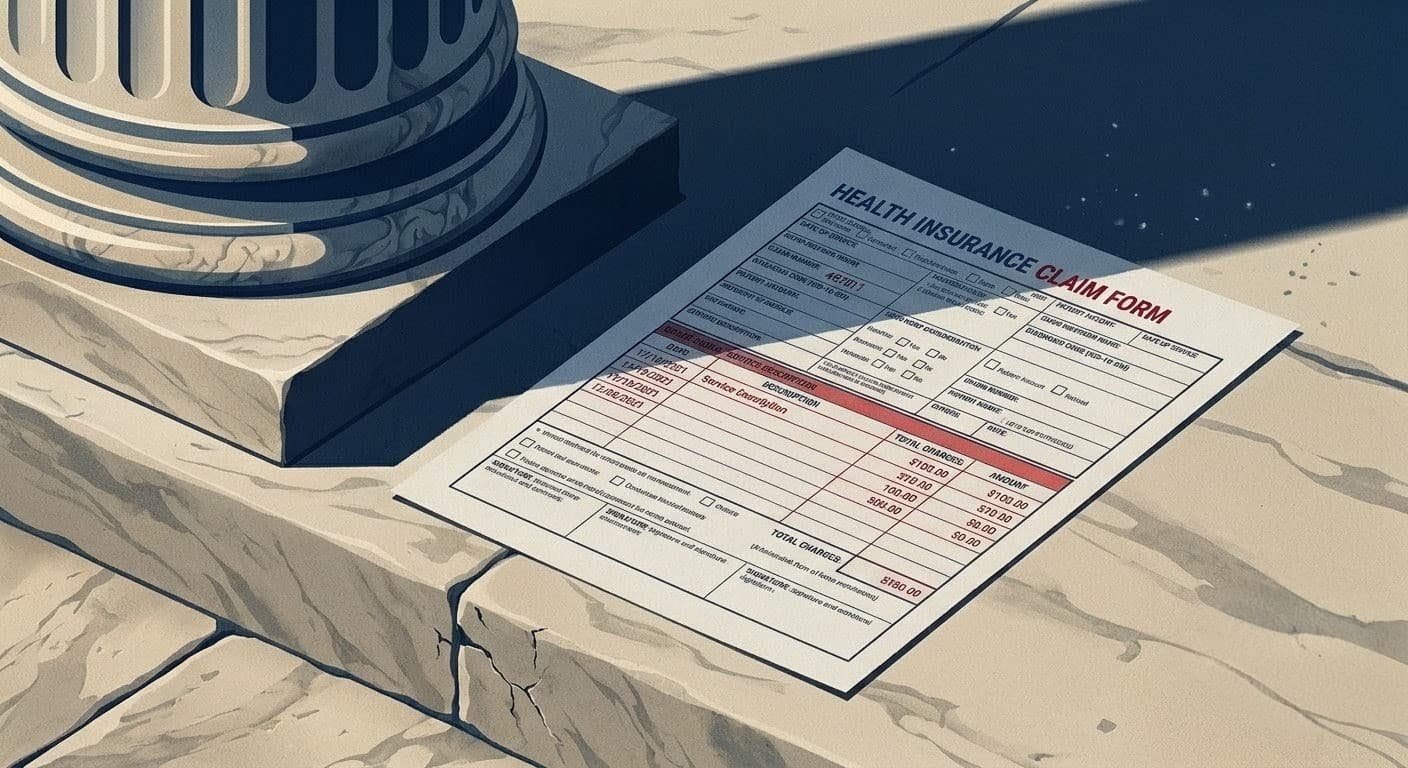

Billing staff face direct personal exposure because the False Claims Act imposes liability on anyone who “knowingly” submits a false claim, not just the practice owner. Knowledge includes actual awareness, deliberate ignorance, or reckless disregard. No intent to defraud is required. Front-line coders and billers who process claims after being alerted to errors carry that same statutory exposure.
Most compliance content treats the FCA as an employer problem. That framing is outdated. Front-desk staff, coders, and billing supervisors now sit inside the government’s line of sight, both as potential defendants and as potential relators. A biller who keeps submitting a code pattern after flagging it internally has already met the “reckless disregard” threshold on paper, whether or not she intended harm.
This dual exposure is the operational reality practice managers rarely explain during onboarding. Staff are trained to bill correctly. They are almost never trained on what happens legally the moment they notice something wrong and keep working the queue anyway.
How Much Money Is Actually at Stake in 2026?
Civil FCA penalties for 2026 remain $14,308 to $28,619 per false claim, unchanged from 2025 because the government shutdown blocked the October 2025 inflation data the Department of Justice needed for its annual adjustment. Each line item on a claim form can count separately, so a single flawed encounter can generate multiple penalty exposures.
That per-claim ceiling is deceptively small compared to what it produces in aggregate. A denied encounter isn’t one violation; it’s often several, because the government treats each line item, each date of service, and each false certification as a distinct instance under the statute. Multiply a modest error pattern across a busy practice’s claim volume and the exposure compounds fast.
The Department of Justice recovered $6.8 billion through FCA actions in fiscal year 2025, an all-time record, and healthcare fraud accounted for $5.7 billion of that figure, according to DOJ settlement data. Medicare Advantage coding manipulation and risk adjustment fraud drove a significant share of that healthcare total, which matters directly for practices billing under MA risk contracts.
Who Actually Files These Cases Against Practices?
Whistleblowers, or “relators,” are most often current or former employees, billers, coders, office managers, and sometimes competitors or patients. They can recover 15 to 30 percent of whatever the government collects, which creates a direct financial incentive layered on top of any ethical motivation to report.
This incentive structure changes staff behavior in ways owners underestimate. A biller who spots a systemic upcoding pattern isn’t just facing an ethical choice. She’s facing a decision with a potential six or seven-figure payout attached if the practice’s total exposure is large enough. That calculus didn’t exist for her twenty years ago in the same way.
The AAPC has documented real cases where billing staff themselves were prosecuted, not just terminated. A Chicago-area medical biller was sentenced to 45 months in federal prison and ordered to pay roughly $1 million in restitution after routinely billing Medicare for care plan oversight services the physicians rarely performed. She wasn’t the practice owner. She was the person entering the codes.
What Legal Protection Exists for Staff Who Report Fraud?
Section 3730(h) of the FCA protects any employee, contractor, or agent from termination, demotion, suspension, harassment, or discrimination for investigating or reporting suspected fraud. A successful retaliation claim entitles the employee to reinstatement, two times back pay, and compensation for litigation costs and attorneys’ fees.
Critically, this protection attaches to the act of reporting, not to the outcome. An employee who raises a good-faith concern about a billing pattern is protected even if the underlying fraud allegation ultimately fails in court. Practices that punish staff for asking uncomfortable questions about coding accuracy are building their own retaliation exposure, independent of whatever the original billing issue turns out to be.
Retaliation rarely looks like an outright firing. It shows up as being cut out of scheduling meetings, stripped of file access, or quietly reassigned to a role with less visibility into claims. Courts read these patterns together rather than in isolation when they assess whether retaliation occurred.
Does the 60-Day Overpayment Rule Create Independent Liability?
Yes. Federal law requires providers to report and return identified Medicare or Medicaid overpayments within 60 days of identification, and retaining a known overpayment past that window can itself become a False Claims Act violation, separate from however the original error occurred.
This is the trap that catches practices who think a coding mistake is a closed issue once it’s noticed. An overpayment is “identified” the moment reasonable diligence would have revealed it, not the moment someone finishes a formal audit. A biller who spots a pattern of overpaid claims and does nothing for 90 days has arguably converted an honest mistake into an active violation through inaction alone.
Compliance officers should treat every internal audit finding as a clock starting, not a filing cabinet entry. The 60-day window applies regardless of practice size or whether outside counsel has been engaged yet.
What Should Practice Managers Do Differently Starting Now?
Practices should document every step of their response to a flagged billing concern, from the date it was raised to the corrective action taken, because that documentation is the single strongest defense against both an FCA claim and a retaliation claim. Silence and delay are read as evidence of knowledge.
Build a written escalation path so billing staff know exactly where a concern goes and what happens next. Vague verbal assurances from a supervisor don’t hold up under discovery. A dated email trail showing the concern was investigated and resolved does.
Second, separate the coding review function from the person who originally submitted the claim. When the same staff member who entered a code is also the only one checking it later, the practice has no internal check against the exact reckless-disregard standard the statute penalizes. Third, train billing staff specifically on Section 3730(h) protections, not just coding accuracy, so they understand their legal position before a problem surfaces rather than after a subpoena arrives.
Finally, run periodic claim audits against current CMS guidance rather than relying on last year’s crosswalk. The Centers for Medicare & Medicaid Services updates coverage and coding policy continuously, and stale internal reference sheets are a quiet, common source of the exact billing pattern that eventually draws a whistleblower’s attention.
The Bottom Line for Compliance Teams
Billing staff are no longer bystanders in False Claims Act enforcement. They frequently see the fraud first, hold legal protection for reporting it, and, in documented cases, face prosecution for continuing to process it. Treating staff training as purely a coding exercise, rather than a legal-risk exercise, leaves practices exposed on both fronts simultaneously.
The practices that come through an FCA inquiry intact tend to share one trait: they built the reporting infrastructure before they needed it, not after. That means a documented escalation path, a compliance officer who actually answers when staff raise a concern, and audit cycles that run on a calendar rather than in reaction to a payer denial letter.
It also means treating whistleblower risk as a two-way street. Staff who feel heard internally rarely become relators. Staff who watch a flagged concern disappear into silence are the ones who eventually call an attorney instead of a supervisor. That single dynamic, more than any coding manual, decides which practices end up defending a qui tam suit and which ones never see one.
Leave a Reply