
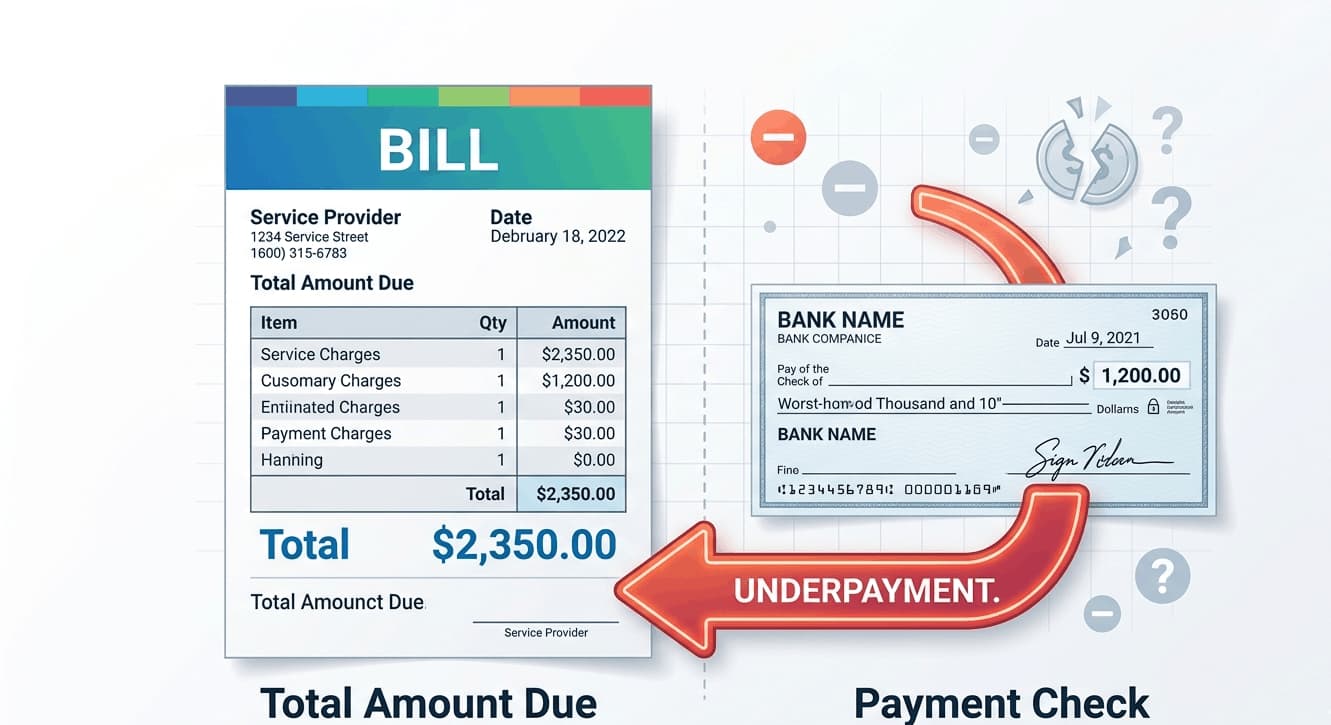

When a claim is denied, you know about it. Your system flags it. Your billing team works it. There’s a workflow. But when a claim is underpaid? Often, nothing happens. The payment posts. The claim closes. The underpayment disappears into your revenue — indistinguishable from a correctly paid claim unless someone specifically looks for it.
That’s the real danger of insurance underpayment. It’s invisible by design.
What Is an Insurance Underpayment in Medical Billing?
An insurance underpayment occurs when a payer reimburses a claim at a rate lower than the contracted fee schedule allows — either through a processing error, incorrect plan application, or deliberate downcoding — and the provider accepts the payment without identifying the discrepancy.
U.S. hospitals and practices commonly lose 4–5% of their revenue to revenue leakage, which includes underpayments. For a practice generating $2 million annually, that’s $80,000–$100,000 per year in payments received but incorrectly calculated.
Why Do Insurance Underpayments Happen?
Insurance underpayments happen because payers process thousands of claims through automated systems that may apply incorrect fee schedules, use outdated contracted rates, misidentify a patient’s plan type, or improperly downcode the billed service — and because providers rarely audit payments against contracted rates.
Common underpayment causes include applying a PPO rate to an HMO patient, applying an older contracted rate after a fee schedule update, bundling separately reimbursable services without notice, and calculating payment on the wrong procedure code. Each is a systematic error that can affect hundreds of claims before it’s detected.
How Do You Identify an Insurance Underpayment?
You identify insurance underpayments by comparing every payment received against the allowed amount in your current payer contract for that specific CPT code, payer plan type, and patient — a process called contract variance analysis that requires either dedicated staff time or specialized software.
Manual contract variance analysis is feasible for small practices with limited payer mix. For larger practices, revenue integrity software automates this comparison. A systematic $12 underpayment on a CPT code billed 400 times per month is $4,800 per month in recoverable revenue.
What Is the Difference Between Underpayment and a Contractual Adjustment?
The difference is whether the payment aligns with the contracted rate. A contractual adjustment is the legitimate write-off between your billed charge and your negotiated allowed amount. An underpayment is when the payer pays less than the allowed amount — a contract violation, not a standard adjustment.
Many billing systems post payments and apply contractual adjustments simultaneously, making underpayments look like legitimate adjustments. Without contract intelligence — the actual allowed amounts per payer and plan — you cannot tell the difference at claim level.
How Can Practices Recover Underpayments From Insurance Companies?
Practices recover underpayments by filing a formal recoupment request or corrected payment dispute with the payer, supported by documentation of the applicable fee schedule, the payment received, and the contractual shortfall — typically within the timely dispute window in the provider agreement.
Most payer contracts include dispute resolution clauses with 90–180 day windows for payment disputes. The first step is knowing your contracts — literally having the contracted rates in a queryable system per CPT code. The second is running systematic payment variance reports to identify disputes before the window closes.
Should Practices Renegotiate Payer Contracts to Prevent Underpayment?
Yes — proactive payer contract renegotiation using market rate benchmarks and practice utilization data is the most effective long-term strategy for preventing systematic underpayment and ensuring reimbursement rates reflect the actual cost of providing care in 2026.
Many practices operate on contracts set five or more years ago, with annual CPI increases that haven’t kept pace with actual cost inflation. A contract renegotiation using MGMA or AAPC benchmarking data — showing where your current rates fall relative to market — gives you a fact-based case for rate improvements.
Frequently Asked Questions
Q: How common are insurance underpayments?
A: Industry estimates suggest 7–11% of claims are underpaid when measured against contracted rates. Virtually no practice is immune, regardless of size or payer mix.
Q: Can a practice dispute an underpayment after the contract dispute window closes?
A: Options are limited after the dispute window closes. Some states have prompt payment laws that provide additional recourse. For larger underpayments, healthcare attorneys can occasionally recover through alternative dispute resolution.
Q: What software helps identify underpayments?
A: Revenue integrity platforms from Waystar, Experian Health, and Availity include contract management and payment variance analysis tools designed specifically for this purpose.
Sources: MGMA 2022 Survey, Aptarro Medical Billing Stats 2026, CMS, AHA Revenue Integrity Resources
Leave a Reply